- No. 688, Jinji Road, Xiangzhou, Guangdong, China

After the melt filling is completed, high‑pressure nitrogen gas is injected to form a hollow structure, which eliminates sink marks in thick‑walled sections, substantially reduces part weight, and ensures long‑term stability in dimensional accuracy and surface quality.
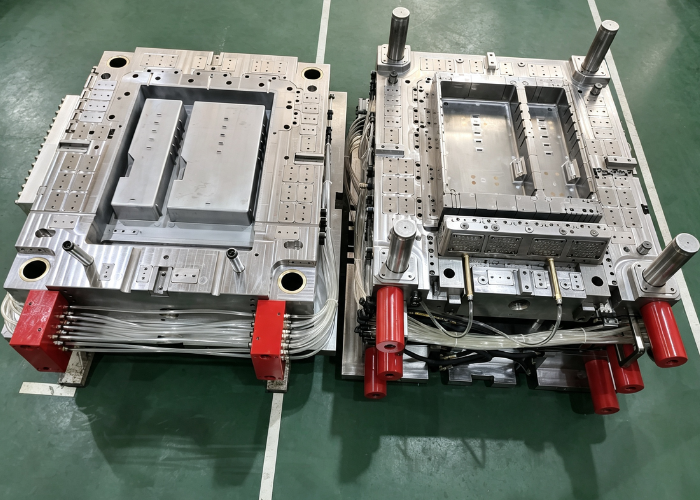
By leveraging CAE analysis to identify areas with inefficient cooling, we incorporate beryllium‑copper (Be‑Cu) inserts to accelerate heat dissipation, thereby achieving a reduced overall cycle time.
With global service coverage and broad expertise in complex mold types, we help customers lower risks and speed up production.
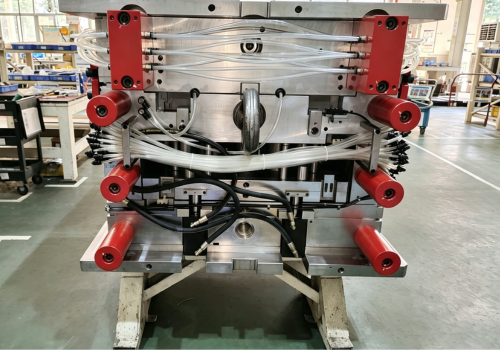
Technical Advantages of Gas‑Assist Molding Through Moldflow CAE analysis, we precisely determine the optimal gas‑injection points and penetration paths.
Hollow gas channels replace solid material in thick‑walled sections, achieving part weight reductions of up to 30%.
Cycle time is reduced by 30–50%. The hollow‑core structure lowers overall wall thickness and thermal mass, enabling significantly faster cooling.
Thicker ribs are employed to enhance part strength, while also contributing to extended mold service life.
Gas‑assist molds are used in nitrogen‑assisted injection molding to produce hollow, lightweight parts.
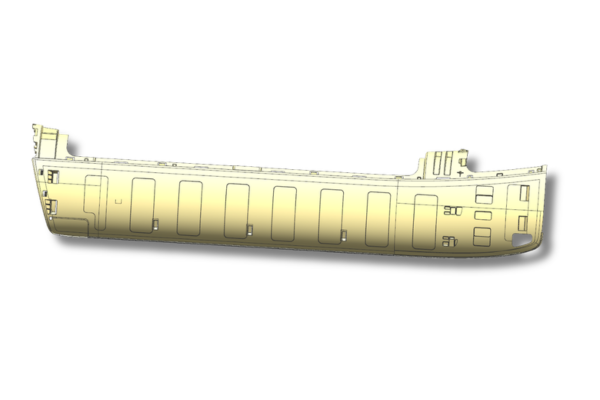
Air Conditioner Decorative Trim: Through CAE analysis, we determine optimal gate and gas‑injection locations, achieving warpage control below 1.5mm for an ultra‑long 1546mm component.
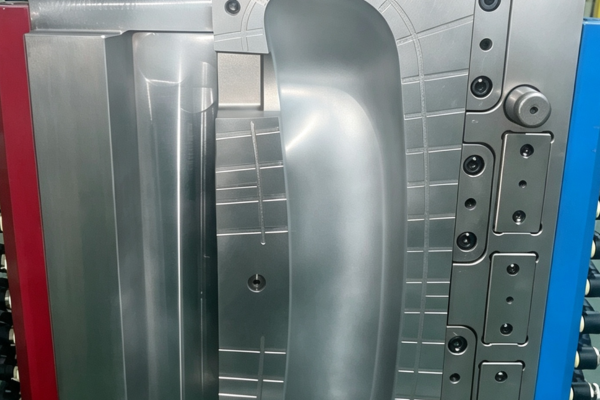
High‑pressure nitrogen applies uniform internal pressure during gas‑assist molding, eliminating sink marks and depressions while saving material and shortening cooling time.
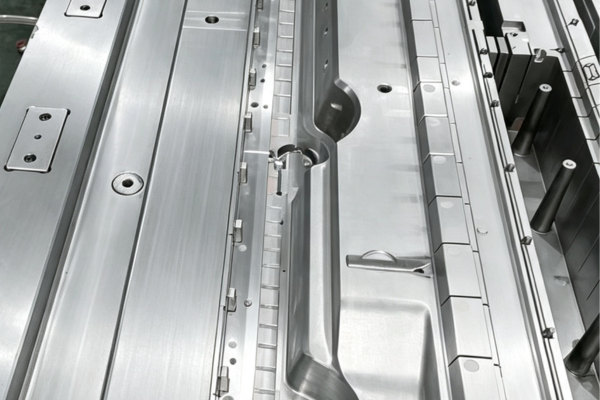
Using gas‑assist technology with Moldflow CAE analysis, we accurately position gas‑injection points and implement reverse‑deflection compensation in the design to guarantee dimensional stability as required by the customer.
Gas‑assist molding technology is suited for products with elongated profiles, thick ribs, substantial wall thickness, and premium appearance demands.
Large decorative panels for air conditioners, refrigerator liners, TV bezels, washing machine parts – all requiring smooth, sink‑free surfaces with superior aesthetics.
Door handles, roof rails, IP carriers, mirror housings, and other interior/exterior trim components that demand high structural integrity, lightweight construction, and flawless visible surfaces.
Electronic keyboards, guitars, wind instrument bodies, and large structural frames – where dimensional stability over long lengths is critical.
Tell us your needs, and we will engineer a customized precision die for you. – we’ll get back to you within 24 hours. Your information is secure and will only be used for project consultation.
